SERVICES
Everything we do, ships with records: Our engineers hold the specification, qualify the source and set the inspection scope. What you buy is a qualified part with a paper trail behind it. The supply chain is the mechanism, not the product.
1. Overhaul and maintenance
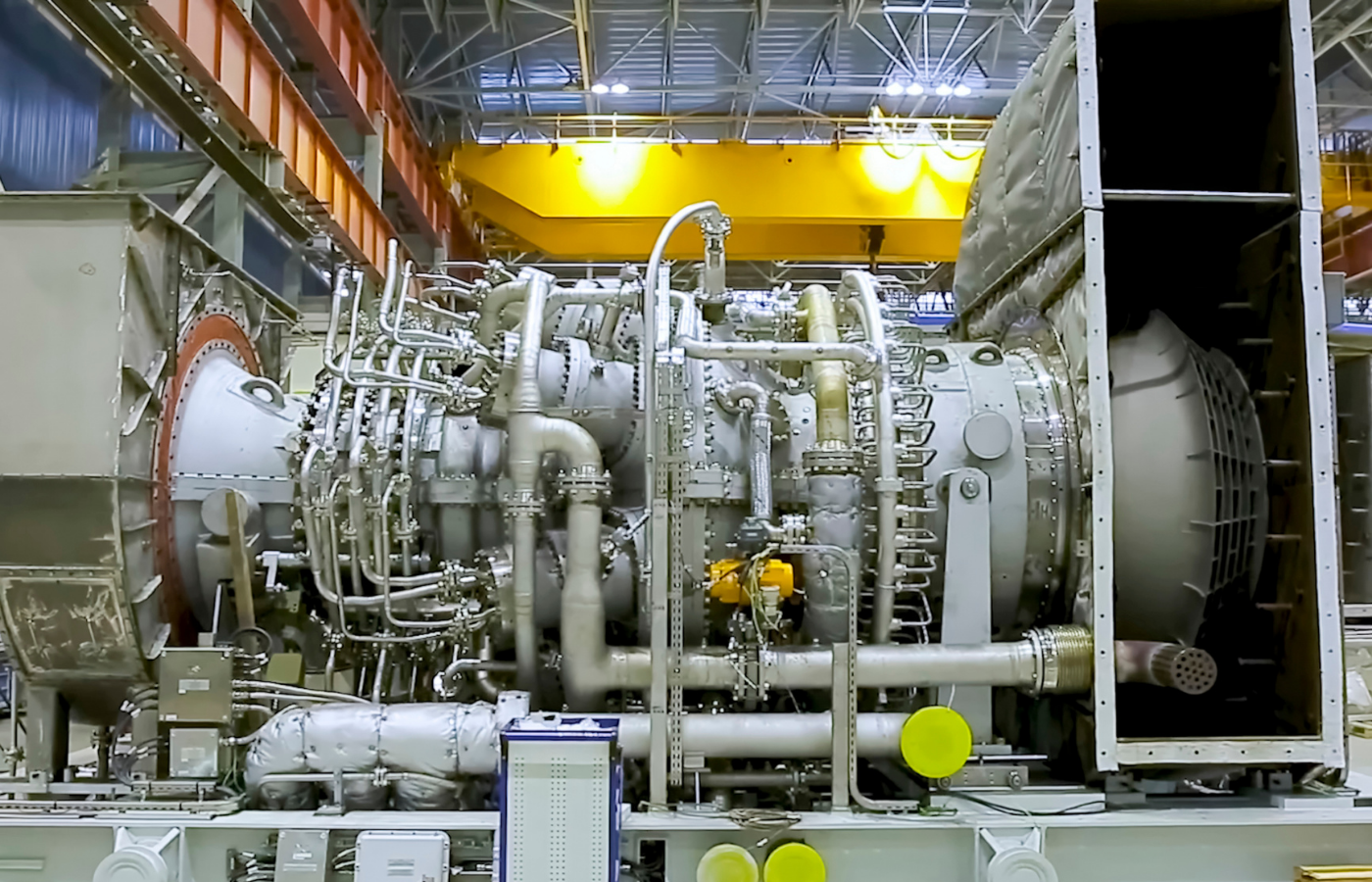
Planned maintenance and shop overhaul delivered with qualified workshops, with our engineers writing the inspection scope and holding the acceptance criteria.
- Maintenance planned by level, with the parts list built per level and per unit rather than per catalogue
- Hot section and borescope inspection, and replica testing after maintenance
- Non destructive testing on site and in shop: penetrant, magnetic particle, ultrasonic, eddy current and hardness
- Non conformance handling, with repair or replace decided on an engineering basis and written down
- Field feedback fed back into the repair and modification loop, so the next interval is set by what was found
What you receive
An inspection report written against a defined acceptance standard, a non conformance register, and a parts recommendation tied to what was actually found in the engine.
Start with one unit and one maintenance level. We return the parts list and the inspection scope.
2. Qualified parts supply
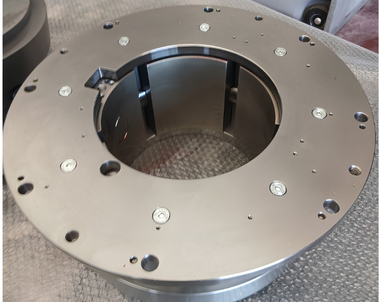
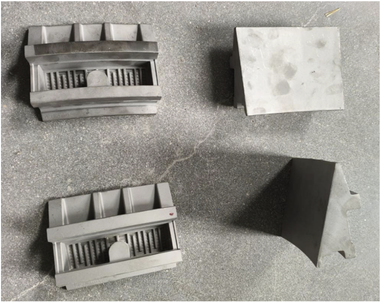
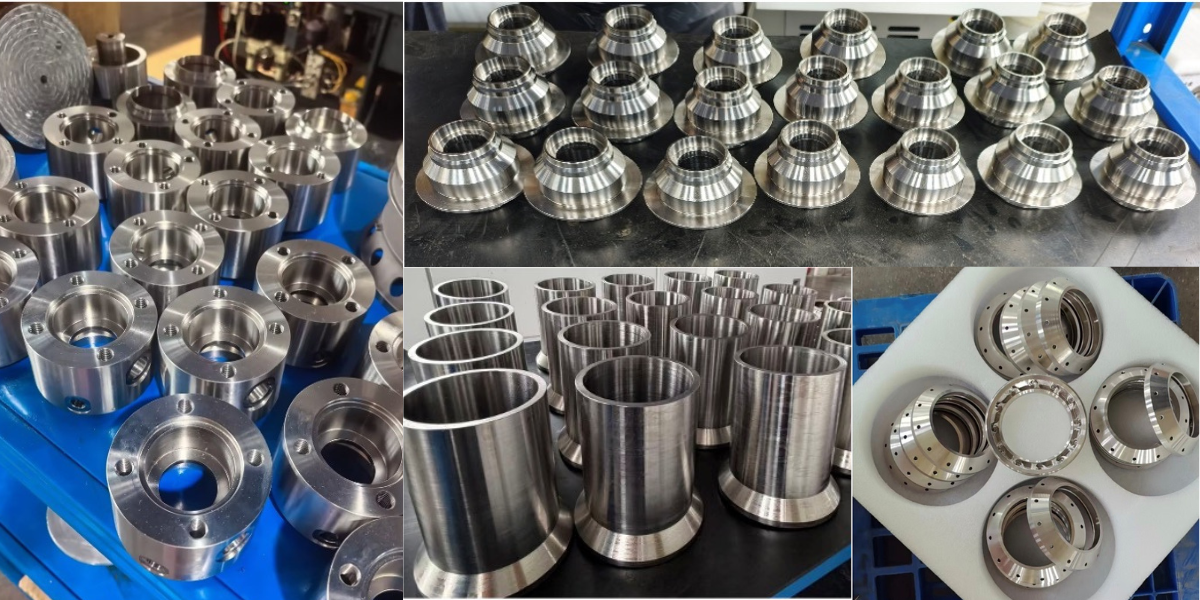
We are not a broker passing on a quote. Our engineers write the specification, qualify the source, set the inspection scope and release the part. We cover capital and consumable parts for GE Frame 5, 6B, 6FA, 9E, LM2500, Siemens SGT-100 to SGT-800, V94.2, Solar Saturn to Titan, and Centrax.
- Every line quoted from more than one source and compared on price, lead time, brand and design standard
- Obsolete, superseded and alternative part numbers identified and reported, never substituted quietly
- Original manufacturer and qualified non OEM routes presented side by side so the decision stays yours
- Pre shipment inspection, with physical inspection by our own representative where the value justifies it
- Hot section, compressor section, combustion, bearings, seals, filters, instrumentation, controls and consumables
What you receive
Material certificates, dimensional reports and non destructive testing records with every shipment, and a quotation that tells you which lines are obsolete before you order them.
Start with a line list. We come back with sources, prices, lead times and the lines you should not be buying.
3. Manufacturing
New make hardware for engines the original manufacturer has stopped supporting. For those parts the tooling is the programme, and the tooling is the thing a shop cannot justify against a single set. We carry it.
Tooling and casting
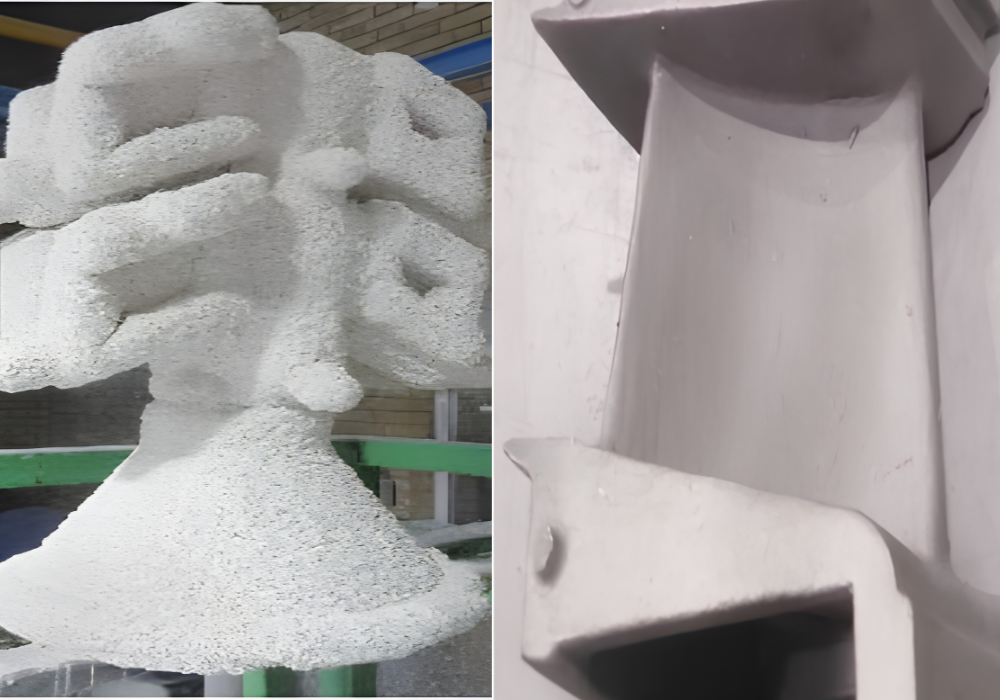
- Wax die design and manufacture, ceramic core tooling for cooled airfoils including internal passage geometry, fixtures, clamps and gauges
- Investment casting clusters, polycrystalline through single crystal where the part calls for it
- First article castings validated dimensionally and metallurgically before release to production
- Flow testing and calibration of cooled blades and nozzles
Coating
- MCrAlY and NiCoCrAlY bond coats by Low Pressure or Vacuum Plasma Spray (LPPS / VPS)
- Air Plasma Spray (APS) ceramic top coats, and Electron Beam Physical Vapour Deposition (EB-PVD) where the design calls for it
- High Velocity Oxy-Fuel (HVOF) wear and carbide coatings for the compressor section
- Pack cementation and Chemical Vapour Deposition (CVD) aluminising, including internal cooling passages
- Strip and recoat available as a standalone service on parts you already hold
Fabrication, machining and additive
- Combustion liners, transition ducts, mixing chambers and heat shields, in sheet metal forming, welded sub assemblies and post weld machining
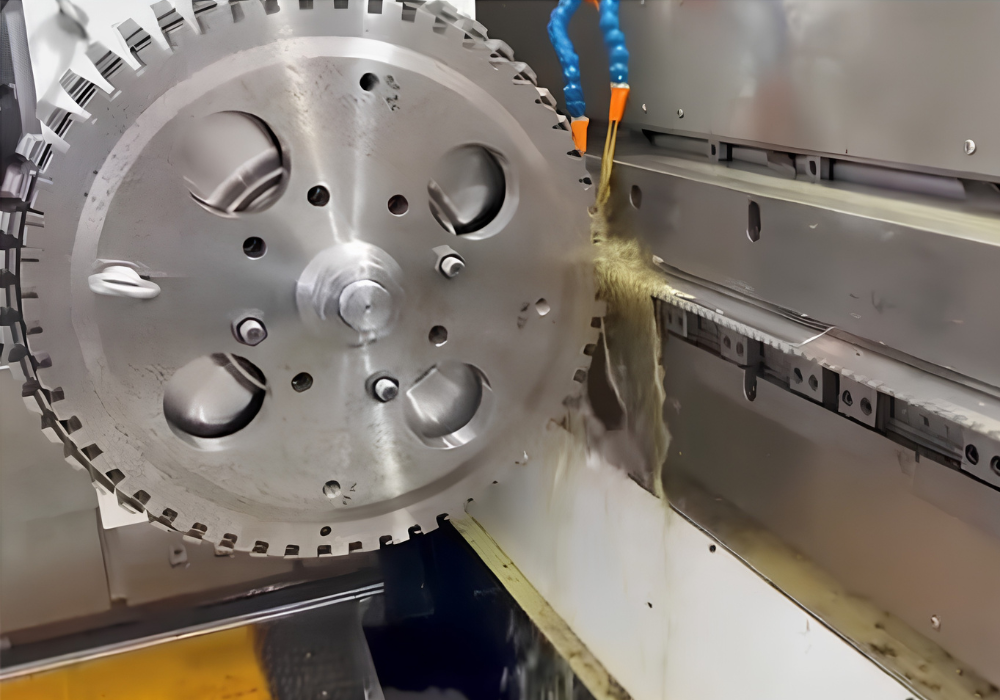
- Turning, Laser Beam Machining (LBM) and Computer Numerical Control (CNC) machining of liners, forged rings and mountings
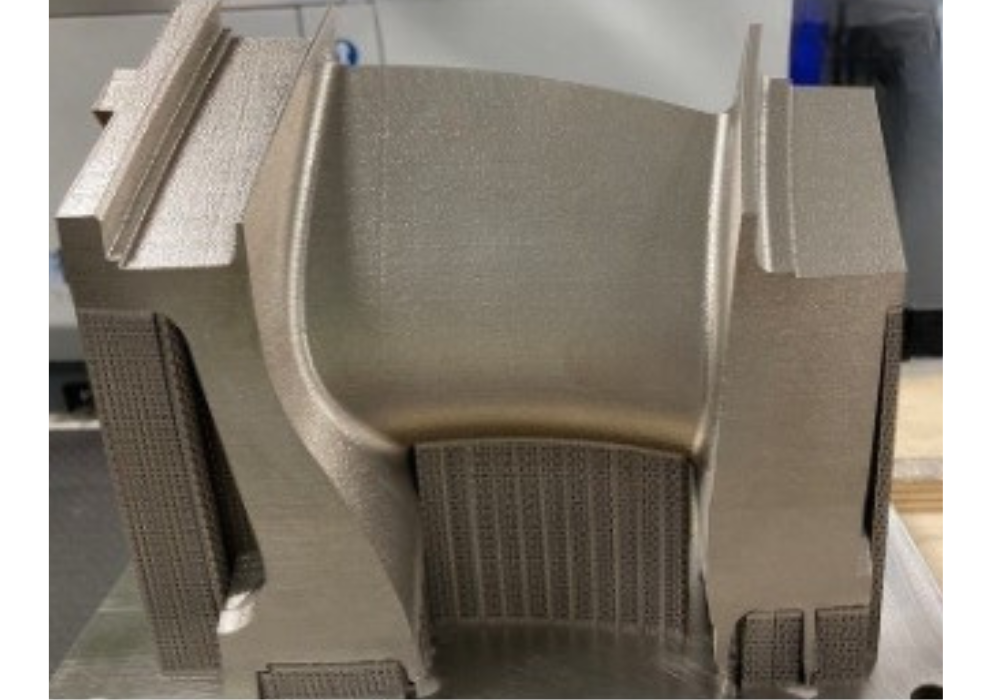
- Laser powder bed fusion for burners, heat shields and prototype airfoils, with stress relief and Hot Isostatic Pressing (HIP) to close porosity
- Radiography and metallography on additive parts, measured against the cast equivalent before either goes near an engine
What you receive
A first article report, material certificates, a dimensional report and the non destructive testing records, on every part in the run and not only the first one.
Start with two or three parts that have no tooling left. We price the dies and a first article set.
4. Life extension
An overhaul interval is a life statement. If a part is made new or put back in service, somebody has to be able to defend the interval it is given.
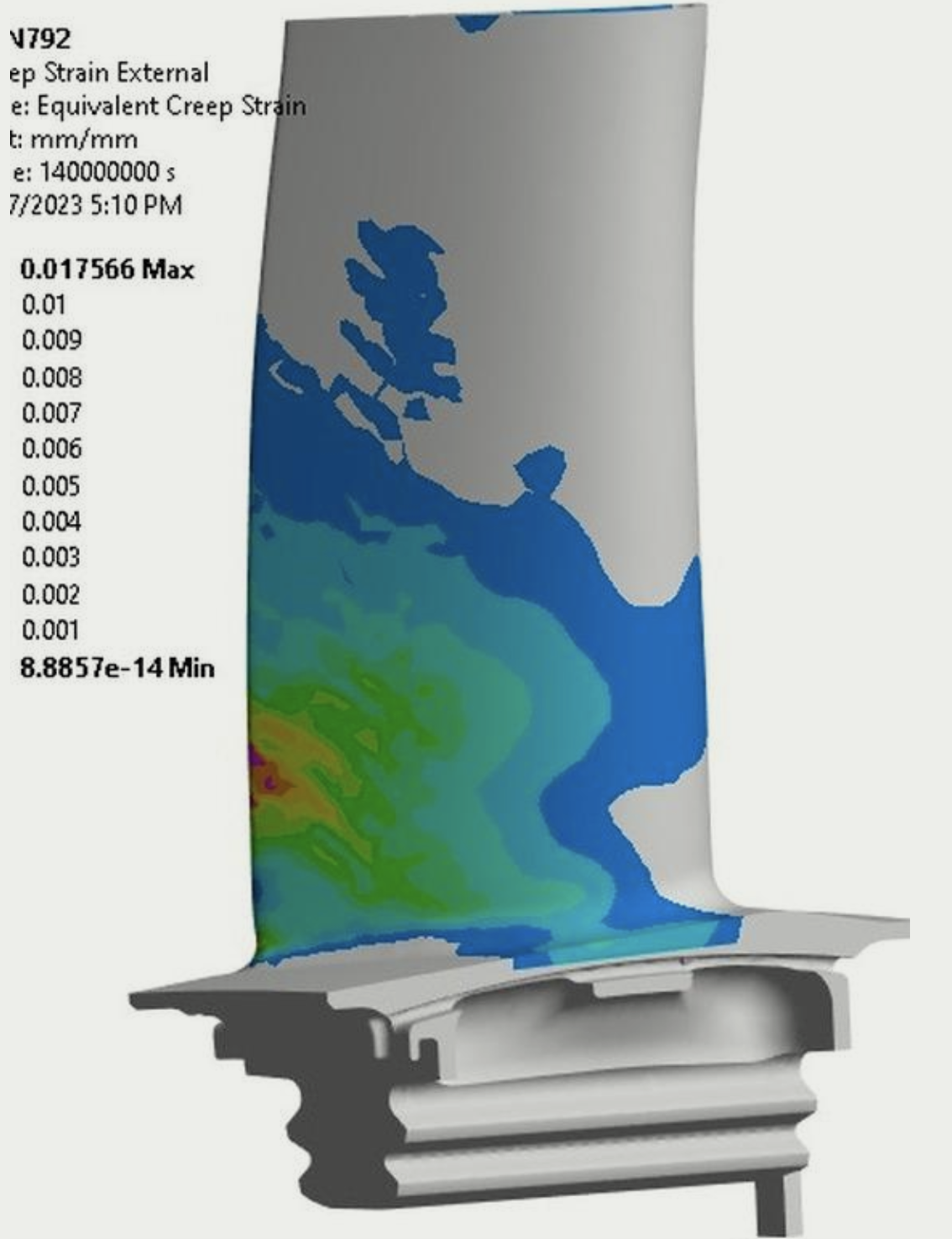
- Creep strain accumulation and creep life predicted against the real service temperature, taken from the conjugate thermal field rather than a design point
- Thermo-Mechanical Fatigue (TMF) analysis through the operating cycle, including start stop and load following duty
- Crack growth estimated by sub modelling from an initiated crack to a defined limit
- Damage and residual life assessment on the part you send us for scanning
- Design modification where the analysis says the original will not reach the interval you need, through cooling, coating or material
What you receive
A report that states the boundary conditions, the assumptions and the comparison against the original design in the open. Not a folder of contour plots.
Start with one part, its duty cycle and its operating hours.
5. Scientific Simulation
The analysis that has to happen before anyone cuts a die, and the analysis that settles an argument about an engine already running. A reverse engineered airfoil can be dimensionally correct and still be aerodynamically wrong.
- Reverse engineering. Blue light scanning and CMM, point cloud converted to a parametric solid model rather than a dumb surface, deviation reporting and material characterisation
- Aerodynamics. Full three dimensional Computational Fluid Dynamics (CFD) and fast methods, with blade to blade loading, loss coefficient and exit Mach number compared stage by stage against the original design
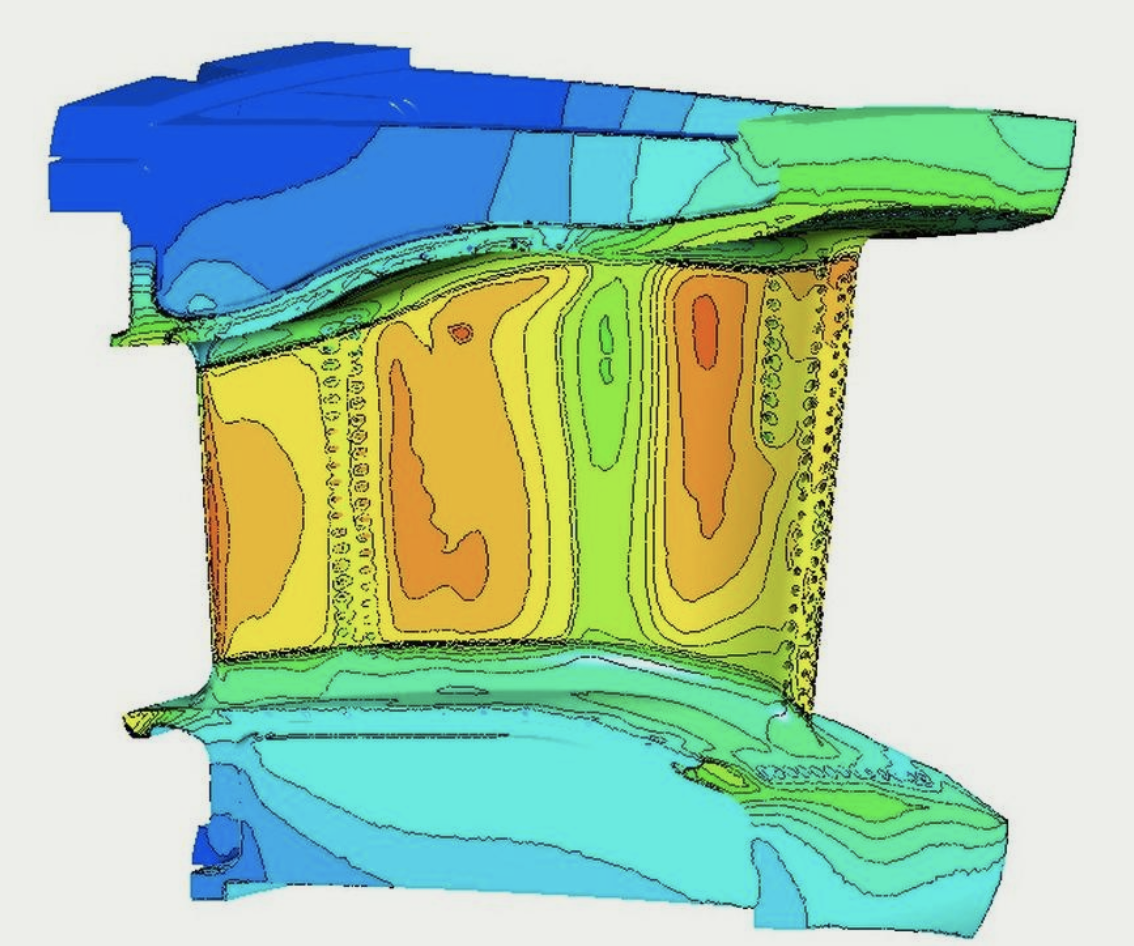
- Conjugate heat transfer. Hot gas, cooling flow and metal solved together, so the metal temperature field comes out of the analysis instead of being assumed
- Combustion. Reacting flow, emissions and combustion instability, with model development validated against benchmark experiments
- Structural and thermal. Finite element models built on the recovered geometry, with pressure and temperature imported from the conjugate solution
What you receive
A report that states the boundary conditions, the assumptions and the comparison against the original design in the open. Not a folder of contour plots.
Start with simulation of one stage at one operating point.